A reading from the Gospel of John
After the meal Jesus said to Simon Peter, ‘Simon son of John, do you love me more than these others do?’ He answered, ‘Yes Lord, you know I love you.’ Jesus said to him, ‘Feed my lambs.’ A second time he said to him, ‘Simon son of John, do you love me?’ He replied, ‘Yes, Lord, you know I love you.’ Jesus said to him, ‘Look after my sheep.’ Then he said to him a third time, ‘Simon son of John, do you love me?’ Peter was upset that he asked him the third time, ‘Do you love me?’ and said, ‘Lord, you know everything; you know I love you.’ Jesus said to him, ‘Feed my sheep.
‘I tell you most solemnly, when you were young you put on your own belt and walked where you liked; but when you grow old you will stretch out your hands, and somebody else will put a belt round you and take you where you would rather not go.’
In these words he indicated the kind of death by which Peter would give glory to God. After this he said, ‘Follow me.’
______________________________
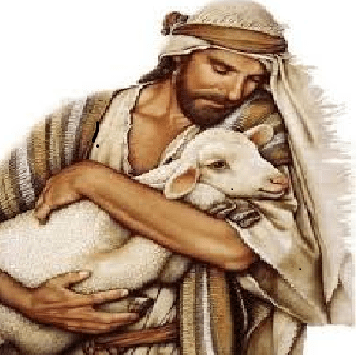
We often hear Jesus being likened to as a shepherd. But if you watch programmes on TV about sheep and shepherds, you are more likely to see the sheep running away from the shepherd rather than wanting to go up to him.
Being a shepherd at the time that Jesus was here was very different. In Judea at that time it was very normal for a family to keep sheep. To eat, to milk, yes, to drink sheep’s’ milk and to use the wool for clothing. It would usually fall to the youngest son in a family to be trained to tend the sheep. Older sons would be trained in the family business or be shown a craft so they could start a new business. The brightest, cleverest boys in any community would be sent to live with the rabbi and train to be a rabbi himself.
But back to sheep. When it was understood who in the family would continue to tend the sheep in years to come, at an age of about 8-10 years old, that boy would be given twelve sheep to tend as their own, note the twelve, like the twelve tribes of Israel or the twelve apostles.
The young shepherd would make himself known to the twelve sheep, the sheep would be young. Sheep don’t recognise faces, but they recognise voices and smells. They would get to know the young shepherds voice and he would move among them and pick up their scent. As the boys and the sheep grew together the sheep would follow him with confidence, and when he took over being the chief shepherd, his twelve sheep would follow him and the other sheep would follow the twelve.
In this reading Jesus is asking Peter to be that shepherd. Let’s be honest, being the family shepherd when your dad’s a carpenter or a banker or rabbi cannot be the most exciting job. Jesus refers to this when he says “somebody else will put a belt round you and take you where you would rather not go” but we are all given gifts and talents which we hope we will be able to use. However, there are times when we don’t get to do, or be what we want.
It’s the same in school life too. Wouldn’t life be grand if we got to do our favourite subject all day, or just do our favourite subject and go home, to wear our own clothes, to eat in the corridor, to stroll into lessons when we feel like it. But we don’t, we have rules and if we ignore the rules, there are consequences.
In asking Peter to look after his followers, Jesus is asking him to set an example to us all, and it’s up to us to pass on that example. He’s telling Peter, you were a boy, now you are a man.
Are you?
Closing Prayer
We praise and thank You that we have boldness to enter into the throne-room of God, to plead and pray to our heavenly Father. Raise up, we pray an army of faithful men to become prayer-warriors – intercessors for their families and for the whole body of Christ in these dark days that we are currently facing. May they be men that pray always with all prayer and supplication in the Spirit and may they stand as watchmen with all perseverance and supplication for all Your children.
 stjosephschaplaincy.org